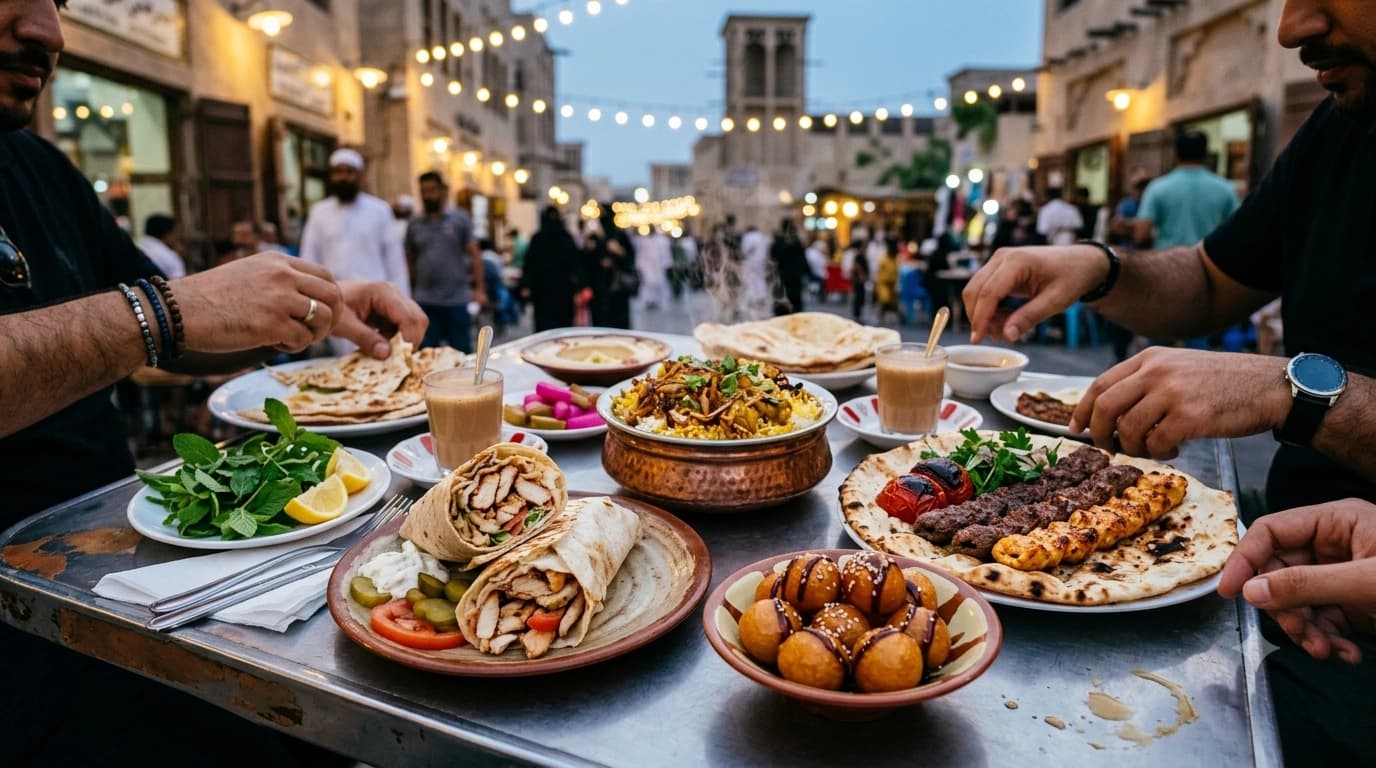
The best meal I've eaten in Dubai cost AED 35, came on a plastic table in Satwa, and was served by a waiter who'd clearly worked there since before I was born. It wasn't at a hotel, it wasn't on a rooftop, and it wasn't anywhere a tourist board will ever send you.
Dubai sells itself on gold-leaf cappuccinos and celebrity chefs, and that version of the city is real. But the food residents actually argue about comes from the people who've lived and cooked here for decades — Emirati families, Iranian traders, Pakistani and Keralite workers, Filipino and Ethiopian communities, Levantine bakers. Al Ustad Special Kabab has been grilling koobideh in Bur Dubai since 1978. That's the Dubai food scene most visitors never find.
I've spent years eating my way through Deira, Karama and Satwa, and the timing of this guide isn't an accident. It's the last week of September, the heat is finally breaking, and for the next six months Dubai eats outside again. The late-night shawarma streets fill up, Global Village reopens, and plastic chairs go back on the pavement. If you've just survived a Dubai summer, this is your reward.
Below are 30 dishes, grouped by cuisine, each with where to go, the area, a 2026 price range and one ordering tip. After that: three food crawls you can do this weekend, how to eat like a local, and an FAQ.
Prices are approximate 2026 ranges, with the top of each range rounded up to allow for increases. Places and opening details checked in late September 2026.
The 30 Dishes at a Glance
Every dish is tagged with a budget tier so you can plan around your wallet:
- 🟢 Street — under AED 25 per person
- 🟡 Mid — AED 25–100 per person
- 🔴 Splurge — AED 100+ per person
| # | Dish | Cuisine | Where | Area | Price (2026) | Tier |
|---|---|---|---|---|---|---|
| 1 | Machboos | Emirati | Al Fanar | Al Seef / Festival City | AED 100–165 full meal | 🔴 |
| 2 | Harees | Emirati | Al Fanar; every iftar in Ramadan | Al Seef | Part of an Emirati meal | 🟡 |
| 3 | Chebab | Emirati | Logma | Box Park + branches | AED 28–32 | 🟡 |
| 4 | Balaleet | Emirati | Logma | Box Park + branches | AED 28–32 | 🟡 |
| 5 | Luqaimat | Emirati | Global Village; Al Fanar | Dubailand / Al Seef | AED 15–28 a box | 🟢 |
| 6 | Regag | Emirati | Global Village stalls | Dubailand | AED 5–17 | 🟢 |
| 7 | Chips Oman sandwich | Gulf | Any cafeteria | Citywide | AED 3–9 | 🟢 |
| 8 | Karak chai | Gulf | Roadside cafeterias | Citywide | AED 2–6 | 🟢 |
| 9 | Chicken shawarma | Levantine | Al Mallah; Ashwaq | Satwa; Deira | AED 10–22 | 🟢 |
| 10 | Falafel & hummus | Levantine | Al Mallah; Operation Falafel | Satwa; citywide | AED 5–25 | 🟢 |
| 11 | Manakish | Levantine | Neighbourhood bakeries | Satwa, Karama | AED 4–17 | 🟢 |
| 12 | Mixed grill & mezze | Levantine | Al Safadi | Several branches | AED 50–100 | 🟡 |
| 13 | Kunafa | Levantine | Al Samadi Sweets; Firas Sweets | Deira; branches | AED 10–28 | 🟢 |
| 14 | Mandi | Yemeni | Nahdi Mandi; Al Romansiah | Deira; Al Barsha | AED 35–65 | 🟡 |
| 15 | Kebab koobideh | Iranian | Al Ustad Special Kabab | Bur Dubai | AED 35–40 | 🟡 |
| 16 | Joojeh & Bahraini tikka | Iranian | Khoori Special Kabab | Al Mamzar | AED 50–55 mixed plate | 🟡 |
| 17 | Chelo kebab & tahdig | Iranian | Shabestan | Deira Creek | AED 150–275 | 🔴 |
| 18 | Biryani | Indian / Pakistani | Jaffer Bhai's; Calicut Paragon | Karama | AED 18–80 | 🟡 |
| 19 | Mutton karahi | Pakistani | Ravi Restaurant | Satwa | AED 35–40 | 🟡 |
| 20 | Nihari | Pakistani | Delhi Restaurant; Daily Restaurant | Deira; Karama | AED 18–33 | 🟢 |
| 21 | Masala dosa | South Indian | Saravana Bhavan | Karama / Bur Dubai | AED 12–22 | 🟢 |
| 22 | Parotta & beef fry | Keralite | Karama canteens | Karama | AED 12–22 | 🟢 |
| 23 | Pani puri & chaat | North Indian | Mini Punjab; Veg World | Meena Bazaar | AED 8–17 | 🟢 |
| 24 | Boodle fight | Filipino | Dampa Seafood Grill | Deira | AED 120–160 for two | 🟡 |
| 25 | Sisig | Filipino | Hot Palayok | Karama | AED 40–45 full meal | 🟡 |
| 26 | Halo-halo | Filipino | Hot Palayok + Karama cafés | Karama | Street-tier dessert | 🟢 |
| 27 | Injera, tibs & wot | Ethiopian | Zagol; Addis Ababa | Karama | AED 60–120 for two | 🟡 |
| 28 | Grilled market fish | Gulf seafood | Waterfront Market | Deira Corniche | By weight + cooking fee | 🟡 |
| 29 | Masala-fried fish | Gulf seafood | Bu Qtair | Umm Suqeim | By weight, cash only | 🟡 |
| 30 | Modern Levantine tasting | Syrian | Orfali Bros | Jumeirah | AED 250–440 | 🔴 |
Start With Emirati Food (Yes, It Exists)
Traditional Emirati food is built on rice, slow-cooked meat, fish, dates and warm spices like saffron, cardamom and loomi (dried black lime). The dishes to know are machboos, harees, balaleet, chebab and luqaimat.
Here's the honest part: Emirati food is surprisingly hard to find in Dubai. Most of it is cooked at home, Emiratis are a small minority of the population, and restaurants serving it are rare. You can live here for five years and never eat it. Don't make that mistake — the handful of places below do it properly.
1. Machboos 🔴
Spiced rice cooked in the broth of lamb, chicken or fish, with loomi and baharat, and the meat laid on top. It's the national dish in all but name, and the Gulf's answer to biryani — less fiery, more fragrant.
Where: Al Fanar Restaurant & Café (Al Seef, with another branch at Festival City). It's done up like 1960s Dubai, which is either charming or kitsch depending on your mood. Backup: Logma. Price: a full meal with sides and juice runs about AED 100–165 per person; the machboos alone costs less.
Order it with daqoos — a tomato-chilli sauce — and go for the crispy rice stuck to the bottom of the pot first.
2. Harees 🟡
Wheat and meat slow-cooked for hours and beaten until it's smooth like porridge, with a pool of ghee on top. It's the comfort food of Ramadan, Eid and weddings.
Where: Al Fanar serves it year-round. During Ramadan it appears at virtually every iftar in the city, from mosque tents to hotel buffets.
It looks plain and tastes rich. Add a little ghee and a pinch of cinnamon, and don't reach for the salt — it's seasoned the way it's meant to be.
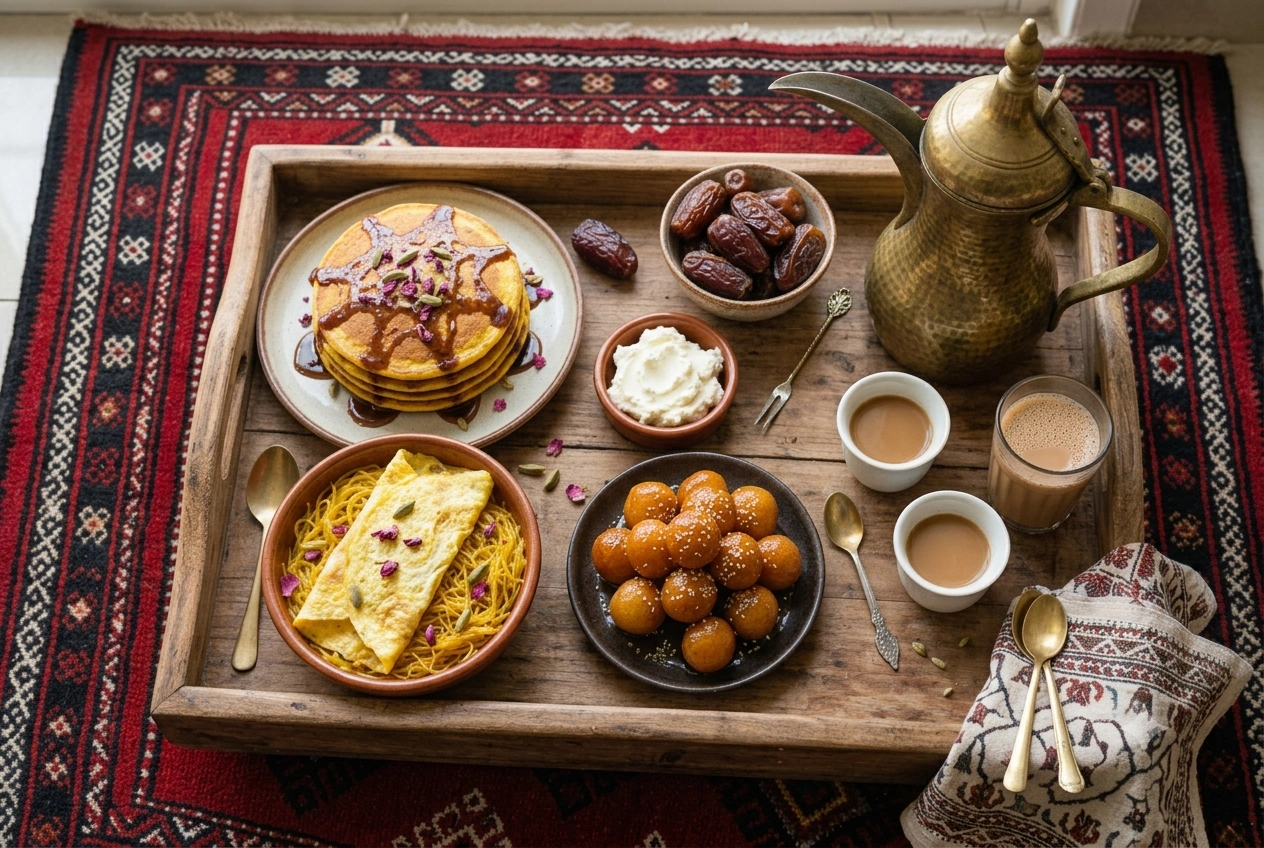
3. Chebab with date syrup 🟡
Emirati pancakes flavoured with saffron and cardamom, served with cream cheese and date syrup (dibs). Think of a thick, fragrant crêpe that wants to be dunked.
Where: Logma, the go-to for Emirati breakfast (Box Park, plus mall branches). Price: AED 28–32 a plate.
4. Balaleet 🟡
Sweet vermicelli with saffron and rosewater, topped with a thin omelette. Sweet and savoury in one bowl. It sounds wrong, and then you taste it and understand why it's a Friday-morning tradition.
Where: Logma, which is widely described as having the best balaleet in town. Price: AED 28–32.
5. Luqaimat 🟢
Crisp fried dough balls soaked in date syrup and sprinkled with sesame. This is Dubai's signature sweet, and the one Emirati dish almost every visitor ends up trying.
Where: Global Village has the best street-style versions, cooked in front of you. Season 31 opens on 14 October 2026 (check the official site for timings). Year-round, try Al Fanar or Siraj. Price: about AED 15–28 a box.
Eat them within five minutes. After that the syrup soaks in and they go soggy.
6. Regag with egg & cheese 🟢
A paper-thin Emirati bread cooked on a hot dome, then folded around egg, cream cheese and sometimes crushed Chips Oman. It's cooked in about 40 seconds and eaten in about 40 more.
Where: regag stalls at Global Village and at heritage events and winter markets. It's mainly a seasonal find, so treat it as a bonus if you're at Global Village. Price: about AED 5–17.
7. The Chips Oman sandwich 🟢
Chips Oman (a chilli-flavoured crisp from Oman) crushed inside a paratha with cream cheese and a hit of chilli sauce. It's the unofficial late-night snack of the UAE, and it makes no sense until 1am, when it makes perfect sense.
Where: any Emirati-style cafeteria or karak spot. If it's not on the menu, just ask for it. Price: about AED 3–9.
8. Karak chai 🟢
Strong black tea boiled with evaporated milk, sugar, cardamom and sometimes saffron. It's the fuel the entire city runs on, and a cup costs less than a bottle of water at the airport.
Where: the roadside cafeterias in Deira, Karama and Bur Dubai, or Filli Café if you want a chain version. Price: about AED 2–6 at cafeterias, more at the chains.
Learn the honk-and-order. At roadside cafeterias you don't get out of the car: you pull up, flash your lights or give a short honk, and someone jogs out to take your order and brings it to your window.
The Arabic Street Food That Runs the City
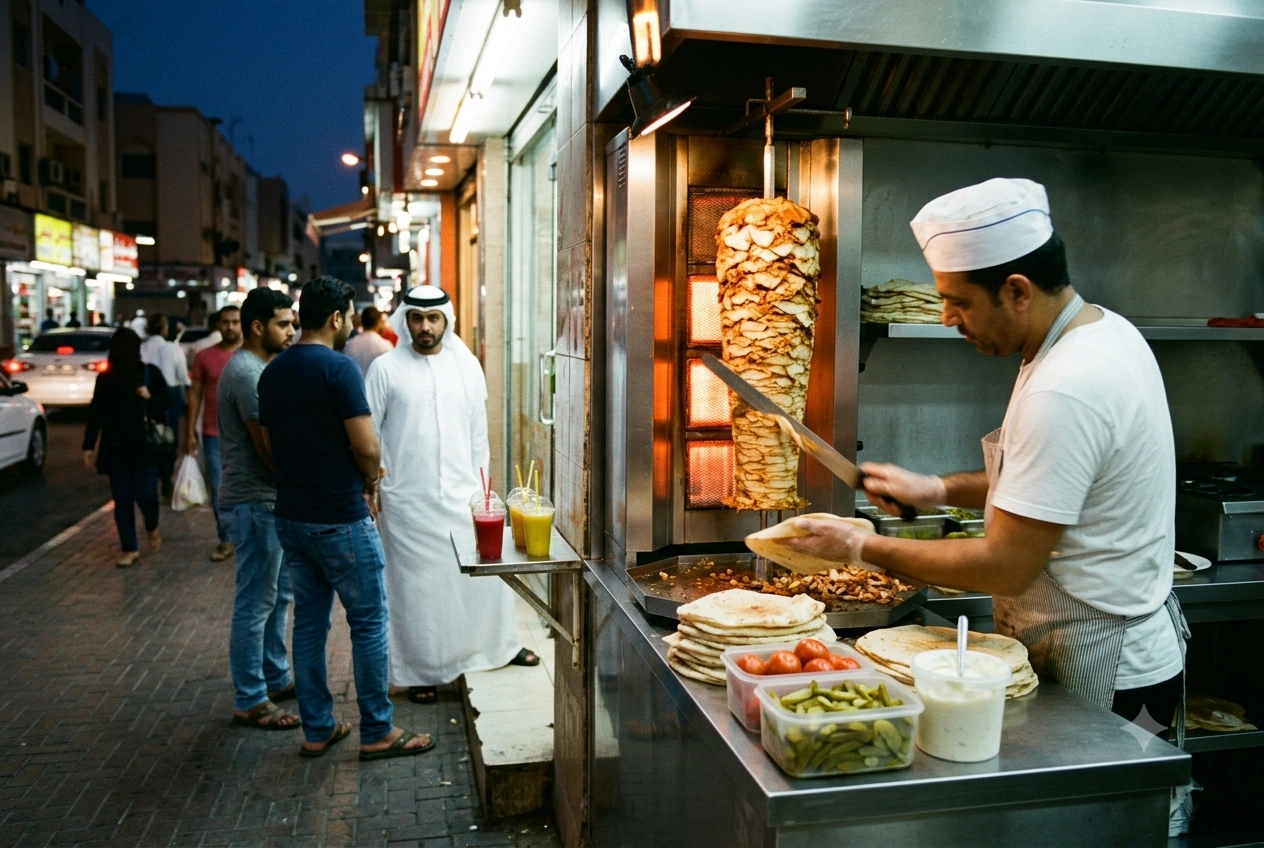
9. Chicken shawarma 🟢
Thin slices shaved from a vertical rotisserie, rolled in Arabic bread with garlic sauce (toum), pickles and a few fries. It's the default Dubai meal at any hour.
Where: Al Mallah on Al Dhiyafa Road in Satwa, which has been the late-night standard for decades. Ashwaq Cafeteria in Deira, near the souks, is famous for its AED 10–12 wrap. Price: about AED 10–22.
Order it "arabi" — cut into pieces and served on a plate with fries, extra garlic sauce and pickles. It's the version regulars argue about.
10. Falafel & hummus 🟢
Crisp, green-centred falafel and hummus drizzled with olive oil. It's the cheapest filling meal on this list.
Where: Al Mallah (same trip as your shawarma), or Operation Falafel, a local chain that's open late. Price: about AED 5–25.
Order the hummus with meat on top (hummus bil lahme) and eat it with hot bread straight from the oven.
11. Manakish 🟢
Levantine flatbread baked with za'atar and olive oil, cheese, or both. It's the standard Arab breakfast and costs less than a coffee.
Where: the small neighbourhood bakeries in Satwa and Karama — the ones with the oven right at the front. Chain backup: Zaatar w Zeit. Price: about AED 4–17.
Ask for half za'atar, half cheese. Every bakery will do it.
12. Mixed grill & mezze 🟡
A platter of shish tawook, kofta and lamb, with hummus, moutabal, fattoush and a basket of bread. It's the Friday lunch of half the city's Arab families.
Where: Al Safadi, which has branches across Dubai. Price: about AED 50–100 per person when sharing.
Skip the paid starters. At most Levantine places the free bread and pickle plate refills on request, and that's half a meal.
13. Kunafa 🟢
Stretchy white cheese under crisp shredded pastry or semolina, soaked in syrup and topped with pistachio. The cheese pull is the whole point.
Where: Al Samadi Sweets in Deira, a Lebanese institution. Firas Sweets, which has branches across the city and is a regular on "best kunafa" lists. Price: about AED 10–28 a portion.
Order it na'meh (fine semolina crust) or khishneh (coarse shredded pastry). Either way, eat it hot, as close to the oven as you can. Cold kunafa is a different, sadder dessert.
14. Mandi 🟡
Yemeni rice with lamb or chicken, slow-cooked in a sealed pit oven so it comes out smoky and falling off the bone. It's traditionally eaten sitting on the floor.
Where: Nahdi Mandi on Al Ittihad Road in Deira, with majlis floor seating. Backup: Al Romansiah (Al Barsha and other branches). Price: about AED 35–65 per person — and one portion easily feeds two.
Order a whole lamb mandi for a group, take a majlis room and eat with your right hand. It tastes better that way, and nobody will look twice.
Iranian Kebab Houses: Dubai's Oldest Food Secret
Iranian traders have been part of Dubai for over a century. Al Bastakiya — the old wind-tower quarter now known as Al Fahidi — takes its name from migrants who came from Bastak in southern Iran. That long history is why the city has so many excellent, unfussy Iranian kebab houses.
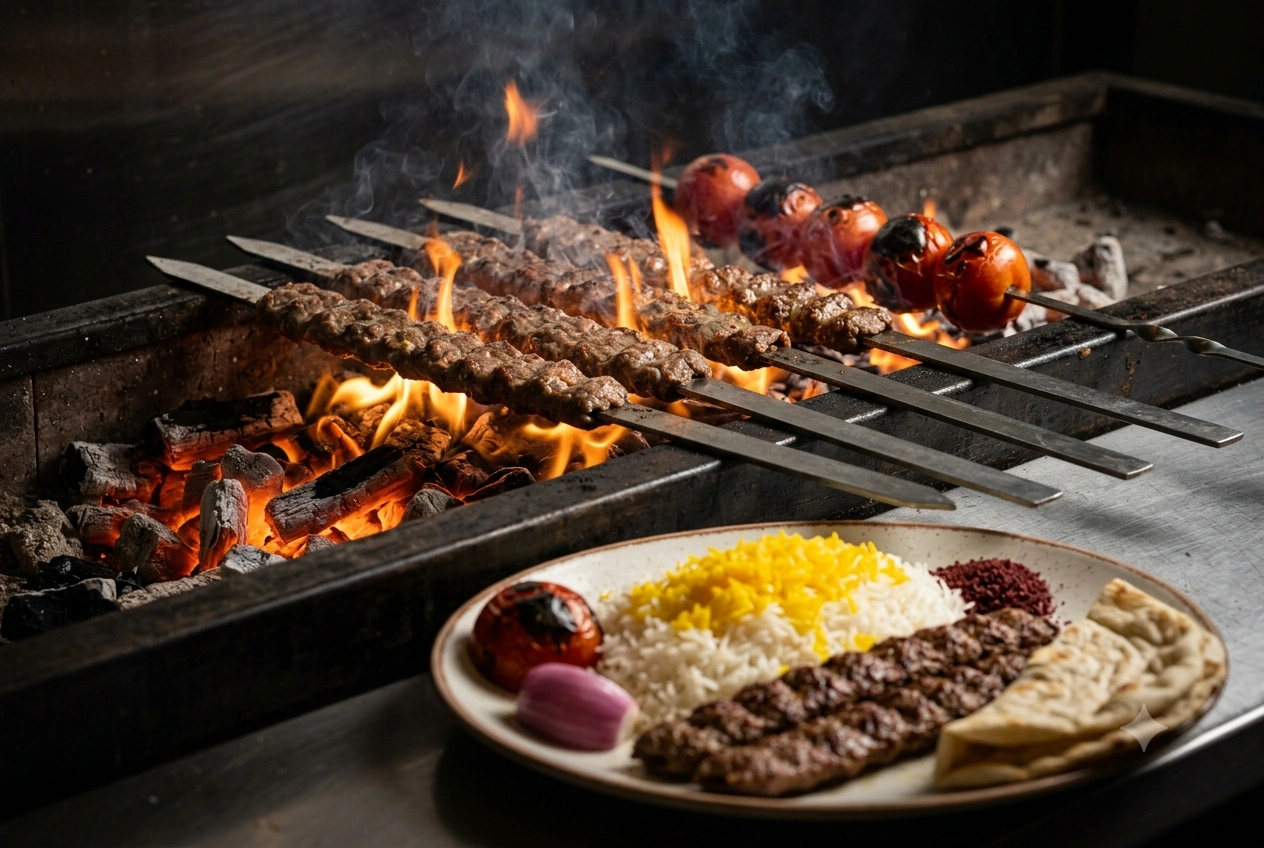
15. Kebab koobideh 🟡
Minced lamb hand-pressed onto wide, flat skewers and cooked over charcoal. It's served with saffron rice or flatbread, grilled tomato, raw onion and sumac.
Where: Al Ustad Special Kabab in Bur Dubai, near Khalid Bin Al Waleed Road and Mankhool. Open since 1978, it's run by the same family, and its walls are covered in photos of famous customers. Price: about AED 35–40 for the lamb koobideh.
It's cash only and takes no reservations. Go before 8pm or be ready to queue on the pavement. The queue moves fast and it's worth it.
16. Joojeh & Bahraini tikka with sangak bread 🟡
Saffron-marinated chicken (joojeh) and the tangy lemon-marinated tikka, eaten with sangak — a huge, pebble-baked flatbread that comes out of the oven longer than your arm.
Where: Khoori Special Kabab in Al Mamzar, behind the Union Co-op. It has carpeted floor seating and outdoor day beds, which come into their own from October. Price: about AED 50–55 for a mixed kebab plate.
Try the limooi (lemon) kebab, and tear the sangak while it's still hot.
17. Chelo kebab with tahdig 🔴
The formal version of Iranian rice and kebab, served with tahdig — the golden, crackly layer of saffron rice from the bottom of the pot, which families fight over.
Where: Shabestan at the Radisson Blu Deira Creek, which has been serving Persian food with Creek views since 1984. It's also on the Michelin Guide's Bib Gourmand list for good-value cooking. Price: budget roughly AED 150–275 per person for a full dinner — its 2026 Ramadan iftar was AED 249 a head, which gives you a sense of the level.
It's here to show the gap: the same cuisine at a fine-dining table costs four or five times what Al Ustad charges. Both are worth doing once.
Karama, Satwa & the Subcontinent
Dubai has a real claim to the best South Asian food outside South Asia. Most of the city's residents are from India, Pakistan, Bangladesh and Sri Lanka, and Karama has been their food district for decades. Karama and Satwa, two of the neighbourhoods we ranked, are where you'll eat best for the least.
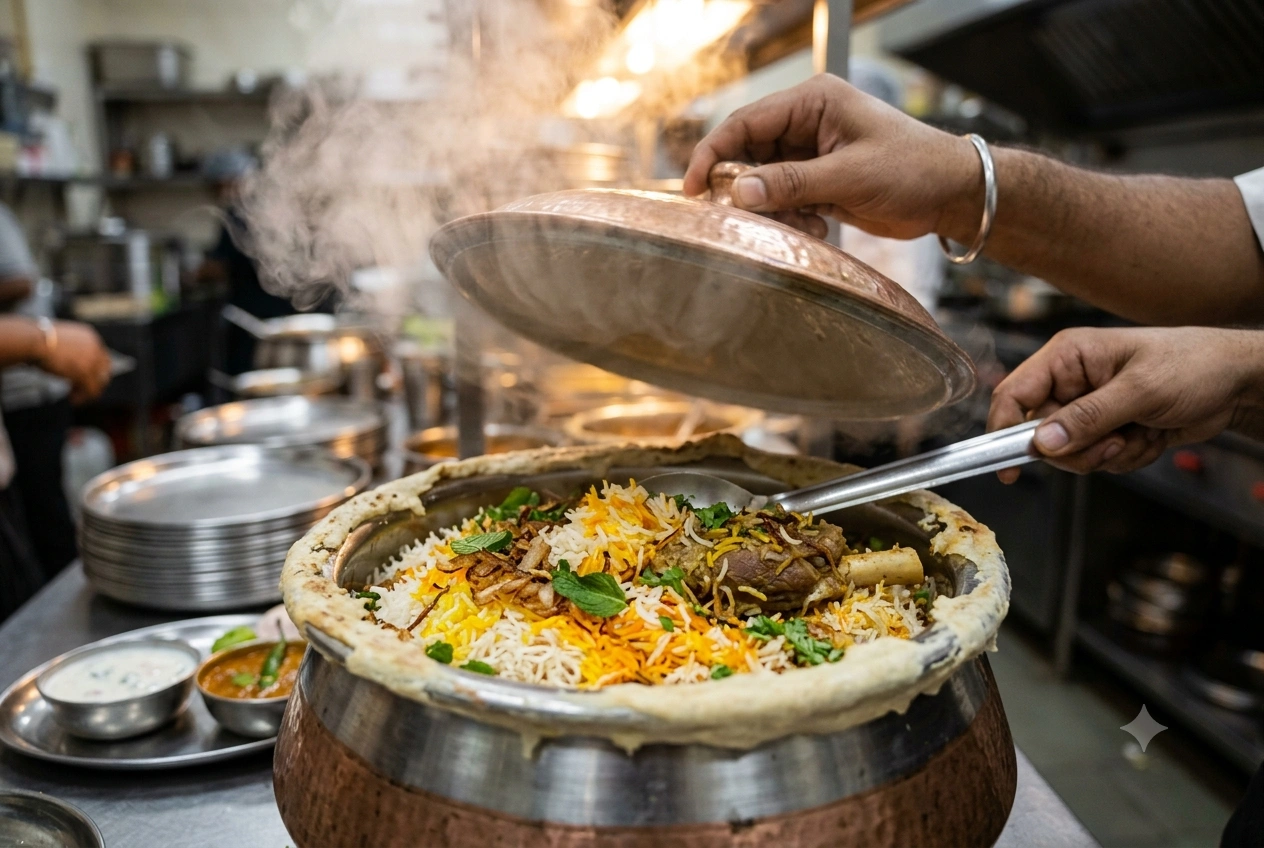
18. Biryani 🟡
Long-grain rice layered with spiced meat and slow-cooked sealed (dum). It's the most argued-about dish in Karama.
Where: Jaffer Bhai's on Zabeel Road, Al Karama, for Mumbai-style biryani — about AED 140–155 for two with sides. Calicut Paragon in Karama for Malabar biryani, made with shorter, fragrant kaima rice and a lighter hand with the spice. Price: AED 18–33 for a cafeteria plate, AED 35–80 at the well-known names.
Hyderabadi is layered and saffron-heavy, Malabar is gentler and aromatic, and Pakistani is hot and full of potatoes and plums. They're all within a ten-minute walk of each other in Karama, so try two styles side by side and pick a side in the argument.
19. Mutton Peshawari karahi at Ravi 🟡
Mutton cooked fast in a wok-like karahi with tomato, green chilli, ginger and black pepper. Eaten with fresh naan and a plate of daal, it's many residents' rite of passage.
Where: Ravi Restaurant on Al Dhiyafa Road near Satwa Roundabout. Eat outside on the plastic chairs; it's open roughly 5am to 2:30am. (Ravi has also opened a fine-dining offshoot on Sheikh Zayed Road — go to the original.) Price: about AED 35–40 per person.
Order the karahi, daal and naan, and skip everything else. That's the meal.
20. Nihari 🟢
Pakistani beef or mutton shank slow-cooked overnight until the gravy is thick and glossy. It's a breakfast dish, and it's brilliant.
Where: Delhi Restaurant on Naif Road in Deira, which has been serving nihari for about three decades. Daily Restaurant in Al Karama (and Al Qusais), which serves it with khameeri roti. Price: about AED 18–33.
Squeeze in lemon, pile on the ginger and green chilli, and eat it before 11am. By lunchtime the good stuff is often gone.
21. Masala dosa 🟢
A thin, crisp fermented rice-and-lentil crêpe wrapped around spiced potato, served with sambar and coconut chutney.
Where: Saravana Bhavan, the South Indian vegetarian chain, with branches in Karama and Bur Dubai. Price: about AED 12–22.
It's the best vegetarian meal for the money in the city. Add a filter coffee and you won't need lunch.
22. Kerala parotta & beef fry 🟢
Layered, flaky parotta torn and dragged through dry-fried beef with coconut slivers, curry leaves and black pepper. It's what Malayali workers eat after a shift, and it's addictive.
Where: Karama's small Kerala "hotels" (canteens), or Calicut Paragon if you want a sit-down version. Price: about AED 12–22.
Crush the parotta with both hands before you eat it to open up the layers. The waiter will nod approvingly.
23. Pani puri & chaat 🟢
Hollow, crisp puris filled with potato, chickpea, tamarind and spicy mint water. It's part snack, part competitive sport.
Where: Mini Punjab Restaurant in Bur Dubai's Meena Bazaar, always crowded for its pani puri and dahi puri. Backup: Veg World, near the Dolphin Hotel in Meena Bazaar. Price: about AED 8–17.
Pani puri is eaten one at a time, as fast as the server fills it. Don't put it down or it collapses.
Filipino Food: Dubai's Most Underrated Cuisine
Filipinos are one of Dubai's largest communities, and Karama and Deira have been their food hubs for decades. Yet almost nobody outside the community eats here. That's a mistake.
24. Boodle fight (seafood feast) 🟡
Rice, grilled and saucy seafood, mangoes and vegetables piled on banana leaves down the length of the table and eaten with your hands. It's a military mess-hall tradition turned party meal.
Where: Dampa Seafood Grill in Deira. It closed after a fire in 2023 and reopened in February 2024. Price: seafood sets run about AED 120–160 and feed two, usually with unlimited rice.
Go with at least four people and book ahead for Friday nights. A boodle fight for two is just dinner.
25. Sisig 🟡
Chopped meat served sizzling on a hot plate with a raw egg and calamansi. The original is pork; in Dubai it's usually chicken or beef, because most restaurants aren't licensed for pork.
Where: Hot Palayok in Al Karama, which does the full Filipino home-cooking menu. Price: about AED 40–45 per person for a full meal.
Stir the egg through while the plate is still sizzling, then squeeze the calamansi over the top.
26. Halo-halo 🟢
Shaved ice layered with ube (purple yam), leche flan, sweet beans, jellies and evaporated milk. It's the best dessert in Karama on a hot afternoon.
Where: Hot Palayok, or the small Filipino cafés around Karama.
Mix everything together before you eat it — that's literally what halo-halo ("mix-mix") means.
Ethiopian: The Karama Discovery
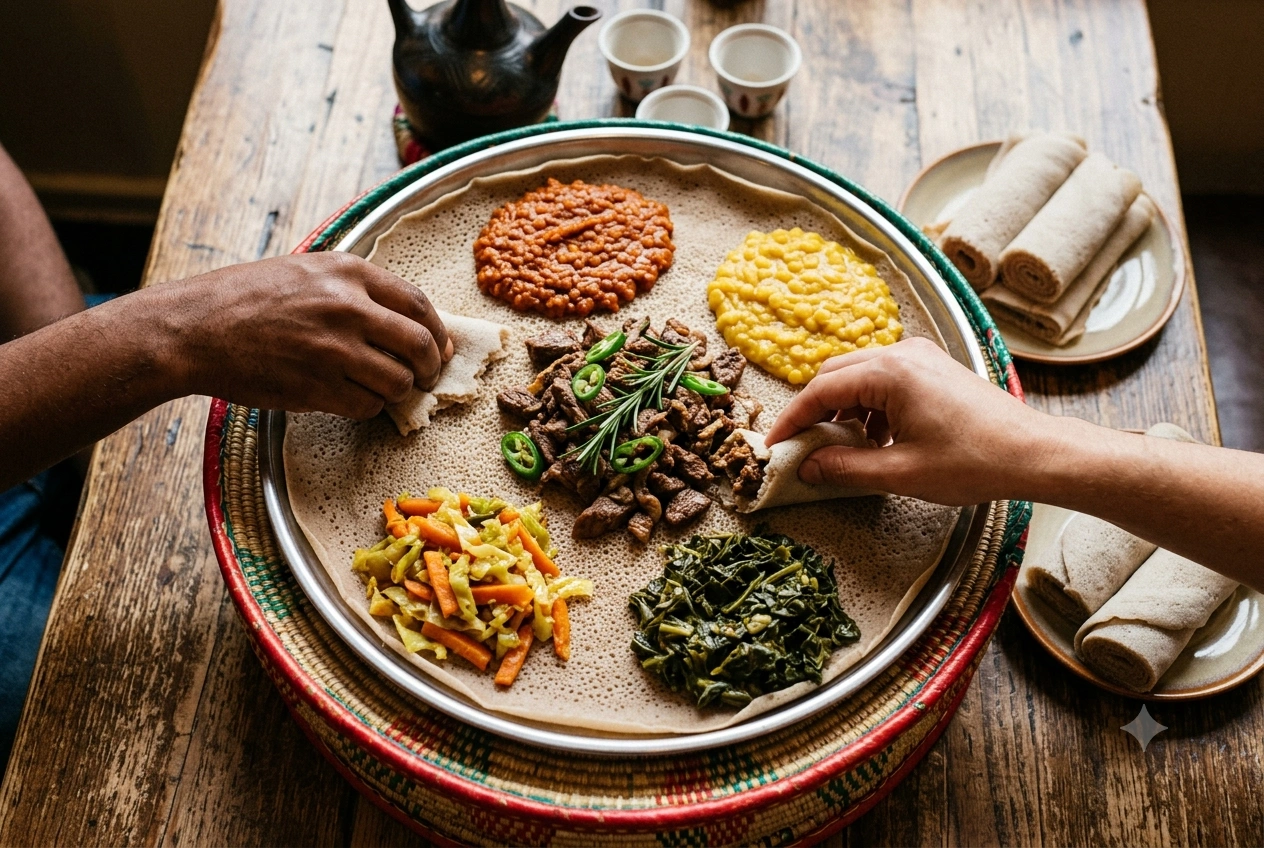
27. Injera with tibs & wot 🟡
Injera is a spongy, sour flatbread made from teff, spread over a platter and covered in stews: spiced red lentils (misir wot), split peas, greens and sautéed meat (tibs). You tear off pieces of injera and use them to pick up the food. No cutlery needed.
Where: Zagol, opposite BurJuman in Al Karama, about AED 110–120 for a full meal. Backup: Addis Ababa Restaurant, also in Karama, about AED 60–90 for two.
Order the beyaynetu (a mixed vegetarian platter) plus one meat tibs, and if they offer the coffee ceremony, say yes. The beans are roasted in front of you and it takes a while — that's the point.
Straight From the Gulf
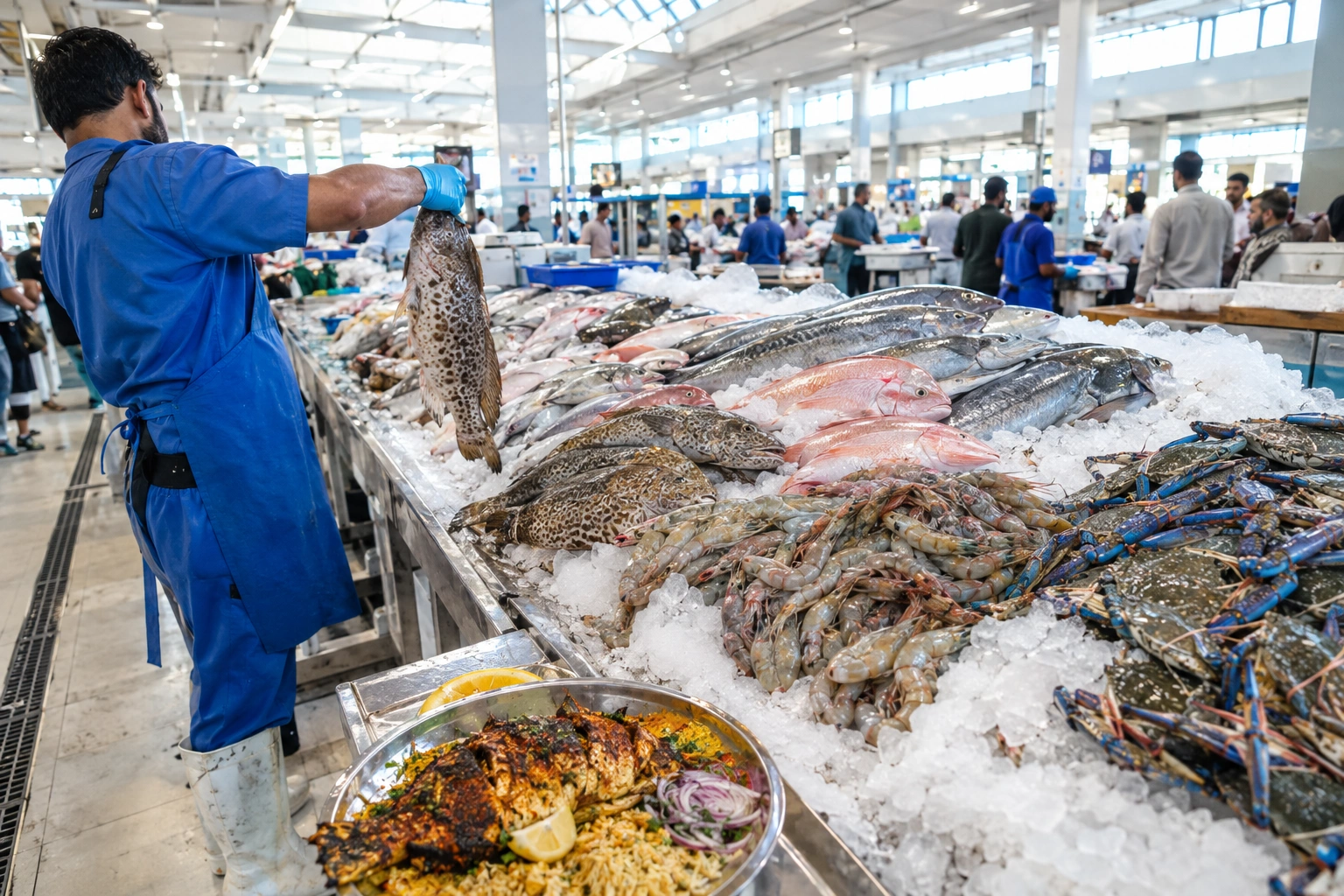
28. Grilled fish at the Deira Waterfront Market 🟡
This is the most Dubai way to eat seafood. You buy your fish at the market counters, have it cleaned, then pay one of the in-market kitchens to cook it — grilled, fried or in a masala curry.
Where: the Waterfront Market on the Deira Corniche, a modern, air-conditioned market hall. Price: fish is sold by the kilo and changes daily with the catch; cleaning and cooking are charged per kilo on top. Agree both prices before anyone picks up a knife.
Go early for the best choice, and haggle — it's expected. One honest note: hammour, the fish everyone orders, has been badly overfished in the Gulf. Ask for sheri or safi instead. They're just as good and it's a small, easy way to help.
29. Masala-fried fish at Bu Qtair 🟡
A no-frills fish shack by the fishing harbour in Umm Suqeim. You choose from the day's catch, it's coated in a red masala and fried, then served with rice and curry — with a view towards the Burj Al Arab.
Where: Bu Qtair, at Fishing Harbour 2 in Umm Suqeim. It moved and changed format a few years ago but is still going strong, open about 11:30am to 11:30pm. Price: by weight — cash only, and no bookings. Pair it with a beach day near Umm Suqeim.
Get there from about 6:30pm. The best fish sells out, and the queue builds fast after sunset.
When You Want to Spend: One Worth It
30. Modern Levantine tasting at Orfali Bros 🔴
Three Syrian-born brothers — Mohamad, Wassim and Omar Orfali — doing inventive, playful Middle Eastern small plates. It held a Michelin star in both the 2024 and 2025 Dubai guides, topped MENA's 50 Best Restaurants three years running (2023–2025) and ranked No. 4 on the 2026 list. It reopened in early 2026 after a renovation.
Where: Wasl 51, Jumeirah. Price: about AED 250–440 per person.
Alternative: Siraj in Souk Al Bahar, facing the Dubai Fountain, for a modern Emirati tasting menu in the same AED 250–440 range. It's the best place to eat Emirati food if you want it dressed up.
If you only splurge once, do it here rather than at a celebrity-chef hotel restaurant. You're paying for cooking that couldn't exist anywhere else, not for the name.
Three Food Crawls You Can Do This Weekend
Reading about 30 dishes is one thing. Here are three routes that string the best of them together, each doable in an evening or an afternoon.
Crawl 1 — Old Dubai & Deira (evening, about AED 90)
Take the Green Line to Al Ras and walk into the souks as the sun goes down. The Spice Souk, Gold Souk and abra ride are all free things to do in Old Dubai — you're only paying for the food.
| Stop | What to order | Cost (2026) |
|---|---|---|
| Deira cafeteria near the souks | Karak + a Chips Oman sandwich | AED 5–15 |
| Deira Old Souk abra station | Abra across the Creek to Bur Dubai | AED 1 |
| Al Ustad Special Kabab (short taxi or 20-minute walk) | Lamb koobideh, rice, doogh | AED 40–55 |
| Arabic sweets shop on the way back | Hot kunafa | AED 10–28 |
| Total | About AED 60–90 |
Crawl 2 — Karama (lunch into late afternoon, about AED 80)
Take the metro to ADCB or BurJuman — our complete metro guide has the lines — and do the whole thing on foot.
| Stop | What to order | Cost (2026) |
|---|---|---|
| Saravana Bhavan | Masala dosa + filter coffee | AED 15–25 |
| Karama biryani row | Two styles, shared (Malabar vs Mumbai) | AED 20–35 each |
| Filipino café | Halo-halo | AED 10–20 |
| Zagol | Ethiopian coffee ceremony | AED 10–20 |
| Total | About AED 60–80 per person |
Crawl 3 — Satwa Night (after 9pm, about AED 65)
Start late. Satwa doesn't get going until after dinner time, and that's the fun of it.
| Stop | What to order | Cost (2026) |
|---|---|---|
| Satwa bakery | Half za'atar, half cheese manakish | AED 4–17 |
| Al Mallah | Shawarma arabi + a fresh juice | AED 20–40 |
| Ravi Restaurant | Mutton karahi, daal, naan | AED 35–40 |
| Total | About AED 65–90 |
You'll finish at Ravi around midnight on a plastic chair, surrounded by taxi drivers, families and people in business suits. That's Dubai.
How to Eat Like a Local
Some of this is in the things nobody tells you when you move here, but it's worth repeating for food:
- Cash still matters. The cheapest, best places are the most likely to be cash only. Carry notes.
- You can order from your car. At roadside cafeterias, flash your lights or give a short honk and someone will come to your window.
- Portions are huge. One mandi or biryani often feeds two. Order less than you think and add more.
- Fresh juice is a cheap treat. Avocado shakes and layered mixed-fruit "cocktails" cost about AED 10–20 at any juice bar.
- Tipping is relaxed. Round up in cafeterias. In mid-range restaurants 10% is appreciated but not expected — check whether a service charge is already on the bill.
- Everything is halal by default. Pork and alcohol are only served at licensed venues, usually in hotels, and they're clearly marked.
- Ramadan changes everything. Daytime hours shift, iftar buffets appear and harees and luqaimat are everywhere. Be respectful about eating and drinking in public during fasting hours.
- Friday brunch is its own world. Hotel brunches are a Dubai institution with their own rules and prices — they'll get a guide of their own.
- Delivery apps are how residents actually eat on weeknights. Talabat, Deliveroo and Noon Food cover most places in this guide, but the food is always better on site.
- Vegetarians eat well. Dosa, chaat, falafel, manakish, hummus and the Ethiopian beyaynetu are all excellent and all cheap.
Frequently Asked Questions
What is the most famous food in Dubai?
Shawarma is the dish most people associate with eating in Dubai, and it's everywhere for about AED 10–22. For something distinctly Emirati, the famous dishes are machboos (spiced rice with meat), luqaimat (date-syrup dumplings) and karak chai, the milky spiced tea the whole city drinks.
What is traditional Emirati food?
Traditional Emirati food is built on rice, slow-cooked meat, fish, dates and spices like saffron, cardamom and loomi (dried lime). The key dishes are machboos, harees, balaleet, chebab, regag and luqaimat. It's mostly cooked at home, so restaurants like Al Fanar, Logma and Siraj are the easiest places to try it.
How much does a meal in Dubai cost in 2026?
It depends entirely on where you eat. Street food like shawarma, karak and manakish costs under AED 25. A sit-down meal at a mid-range local restaurant is about AED 25–100 per person. Hotel restaurants and fine dining start around AED 100 and easily reach AED 250–440 for a tasting menu. All prices are approximate 2026 ranges.
Where is the best street food in Dubai?
The best street food is in the older neighbourhoods: Deira and Bur Dubai around the Creek, Karama for South Asian, Filipino and Ethiopian food, and Satwa for late-night shawarma and Pakistani grills. From 14 October 2026, Global Village adds seasonal street food stalls from dozens of countries, including the best luqaimat and regag in the city.
Is food in Dubai halal?
Yes. Almost all food in Dubai is halal by default. Pork is only sold and served at licensed venues and in clearly separated sections of some supermarkets, and alcohol is only served at licensed venues, mostly in hotels.
Where can I try Emirati food in Dubai?
Al Fanar (Al Seef and Festival City) for machboos and harees, Logma for Emirati breakfast dishes like chebab and balaleet, and Siraj (Souk Al Bahar) for a modern Emirati tasting menu. Al Khayma Heritage Restaurant in Al Fahidi is on Michelin's Bib Gourmand list. In season, Global Village has luqaimat and regag stalls.
Is Dubai good for vegetarians?
Very. Thanks to the huge South Indian and Gujarati communities, some of the city's best cheap food is vegetarian: masala dosa at Saravana Bhavan, chaat and pani puri in Meena Bazaar, falafel, hummus and manakish at Levantine bakeries, and the Ethiopian beyaynetu platter in Karama.
What should I eat in Dubai if I only have one day?
Start with an Emirati breakfast (chebab and balaleet) and karak, have a biryani in Karama for lunch, then do Crawl 1 in the evening: the Old Dubai souks, an abra across the Creek, koobideh at Al Ustad and hot kunafa to finish. You'll cover four cuisines for well under AED 200.
The Bottom Line
Dubai's food reputation is gold-leaf burgers and AED 1,000 tasting menus, and you can absolutely eat that way here. But the city's real food is a kebab under AED 40 at a place that's been open since 1978, a karak handed through your car window, and a biryani argument in Karama that nobody ever wins. It's cheap, it's wildly varied, it's open late, and it was cooked by the communities who built the city. Now that the heat has broken, go and eat it outside.
Tell me the dish I missed. If three of you name the same place, I'll go, eat it and add it to this list — with credit.